
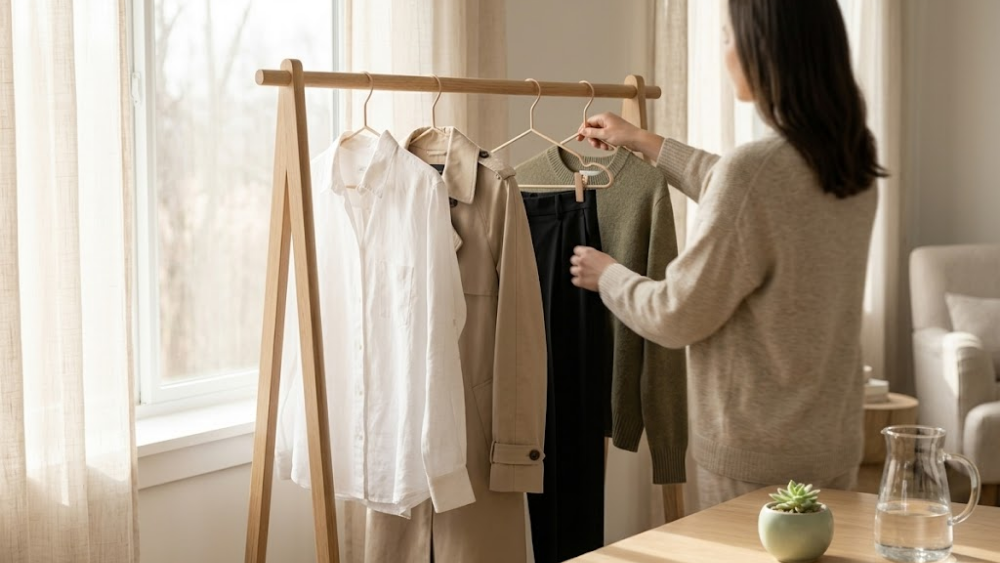

We have all stood in front of a full closet and uttered those infamous words: “I have nothing to wear.” This paradox of choice is the ultimate symptom of an unintentional lifestyle. It’s the result of years of reacting to fast-fashion trends rather than curating a personal brand that reflects who we truly are.
The fast-fashion industry thrives on speed and volume, encouraging us to buy quickly and dispose just as fast. It’s a chaotic system that results in overwhelmed closets and a massive environmental footprint.
Today, we are changing the narrative. We are trading the “more, faster” mentality for “better, slower.” Welcome to the Pretty Intent guide to curating a sustainable capsule wardrobe, where style is defined not by what you own, but by how thoughtfully you choose it.
What is a Capsule Wardrobe?
Popularized in the 1970s by Susie Faux and later brought to the mainstream by Donna Karan, a capsule wardrobe is a curated collection of a few essential (and usually neutral) items that don’t go out of fashion. The goal is to maximize your outfit combinations while minimizing the total number of items you own.
For the intentional minimalist, a capsule wardrobe is the physical manifestation of “Curation.” It reduces the cognitive load of getting dressed each morning, saves money in the long run, and significantly reduces textile waste.
1. The Foundation: The Wardrobe Audit
Before you can create, you must declutter. Curating a sustainable capsule wardrobe always begins with an honest audit.
- Define Your Core Style: What are your go-to silhouettes? For me, it’s tailored trousers and relaxed linen button-downs. Your core style is your compass.
- The “Value” Question: For every item you own, ask: “Does this item serve my lifestyle today, and is it a quality piece I can wear for years?” If it’s a polyester trend item from last season that you haven’t worn in six months, it’s a “no.” Be ruthless.
2. Curate Your Color Palette
The key to maximal combinations from minimal items is cohesion. A capsule wardrobe should have a unified color palette.
- The Base Neutrals (60%): Start with 2-3 base neutral colors that play well together. Think black, white, navy, or gray.
- The Accents (40%): Choose 1-2 complementary accent colors (like camel, soft sage, or blush) that you genuinely love. This ensures that almost every top in your collection can be paired with almost every bottom, automatically tripling your outfit options.
3. Invest in Quality “Hero” Pieces
This is where sustainability and intention collide. Fast fashion is cheap because it is low quality. We need to shift our mindset from quantity to longevity.
- Identify Your “Heroes”: Hero pieces are the items you wear weekly and form the foundation of most outfits (e.g., a well-fitting blazer, quality denim, a timeless white button-down).
- Focus on Materials: Learn to read labels. Prioritize natural, biodegradable fibers like organic cotton, linen, wool, and Tencel. A quality wool sweater will look beautiful for a decade; a synthetic blend will pill and lose its shape within a season. Yes, they cost more initially, but their cost-per-wear is significantly lower.
4. Shop with Intention (The “Rule of Three”)
When your audit reveals a gap in your collection, fill it thoughtfully. The goal of a sustainable capsule wardrobe is not to buy nothing; it’s to buy better.
- The Rule of Three: Before purchasing any new item, you must be able to visualize at least three distinct outfits you can create with items you already own. If you can’t, it’s not a cohesive addition; it’s an isolated purchase that will likely sit in your closet unworn.
5. Mindful Sourcing & Care
The final pillar of a sustainable wardrobe is knowing where your clothes come from and how to care for them so they last.
- Support Ethical Brands: Seek out certifications like GOTS (Global Organic Textile Standard) and Fair Trade. Support brands that are transparent about their supply chain and labor practices.
- Care for Longevity: Wash your clothes less often, use cold water, and air dry whenever possible. Learn basic mending (or find a good local tailor). Respecting the garments you own is the ultimate act of sustainability.
Conclusion
Curating a sustainable capsule wardrobe is not an overnight project; it is a slow and thoughtful journey. It is a commitment to expressing your authentic style with grace, clarity, and respect for the planet. Start with the audit today, and experience the quiet confidence that comes from owning a closet where every item is chosen, on purpose.